Water has a funny way of becoming invisible in our daily lives. We turn on a faucet, fill a glass, take a shower, wash vegetables, and move on. It’s always there, so we rarely stop to wonder what is actually coming through the pipes. Yet the quality of household water can influence everything from the taste of your morning coffee to the condition of your plumbing and appliances.
Clear water isn’t necessarily perfect water. Depending on the source, it can contain minerals, microorganisms, sediment, chemicals, or other substances that affect its appearance, taste, or performance. The good news is that homeowners have more treatment options than ever. The challenge is figuring out which solution actually makes sense.
Begin With a Simple Water Test
Before spending money on filtration equipment, testing your water is one of the smartest things you can do. It gives you a starting point instead of leaving you to guess.
A basic water analysis may examine pH, hardness, iron, manganese, dissolved solids, chlorine, and other characteristics. Private well owners may need additional testing because groundwater conditions can differ considerably from one location to another.
Municipal water supplies are generally monitored and treated before reaching homes, but that doesn’t mean every household will experience the same taste or quality. Plumbing age, local conditions, and changes in the distribution system can all influence what comes out of the tap.
Testing also prevents a common mistake: buying a system designed to solve a problem you don’t actually have.
Hardness Is More Than an Annoyance
Many homeowners first notice hard water because of the white spots it leaves on faucets, shower doors, or dishes. Soap may feel difficult to rinse away, and showers can leave skin feeling unusually dry. Over time, mineral scale may accumulate inside water heaters, fixtures, and plumbing components.
Hardness is primarily associated with dissolved calcium and magnesium. These minerals aren’t automatically a reason to panic; in fact, they occur naturally in many water supplies. The issue is how much is present and how it affects your household.
For homes with significant hardness, a properly sized softening system can reduce those minerals and help limit scale formation. But treatment should still be based on actual water chemistry. A system that works beautifully in one home might be unnecessary or poorly suited to another.
Where Disinfection Fits In
Filtration and disinfection aren’t quite the same thing. A filter can physically remove particles or reduce particular contaminants, while disinfection is focused on controlling microorganisms.
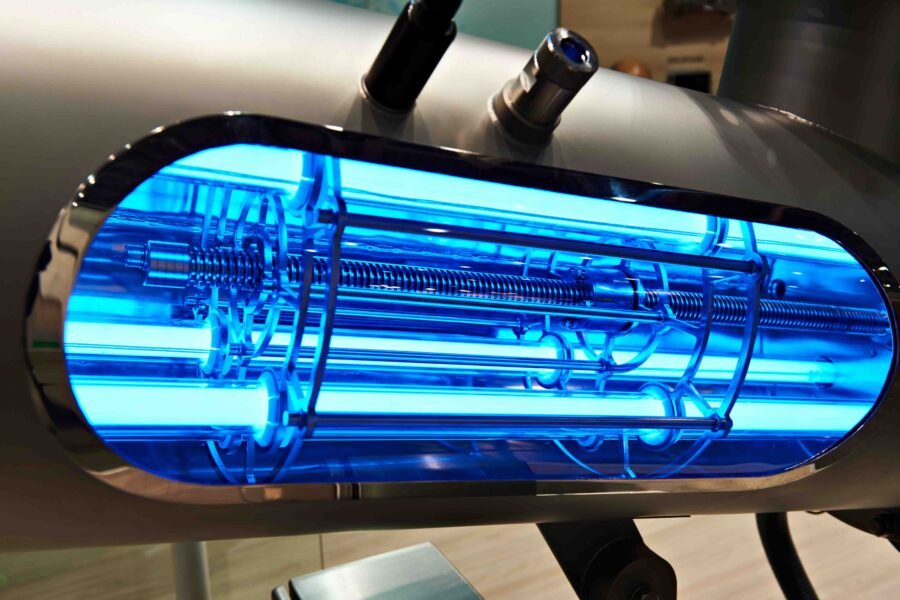
For certain applications, uv disinfection systems offer a chemical-free method of treating water by exposing microorganisms to ultraviolet light. When designed and maintained correctly, UV treatment can inactivate many bacteria, viruses, and other microorganisms.
UV treatment doesn’t remove hardness, sediment, or dissolved chemicals, though. That’s an important point that sometimes gets lost in the excitement around new technology. If incoming water contains substantial sediment, prefiltration may be necessary to protect the UV system and allow the light to work effectively.
In other words, UV can be an excellent part of a treatment strategy, but it isn’t automatically a complete solution for every water-quality problem.
Don’t Judge Water by Taste Alone
Taste is useful information, but it isn’t a laboratory test.
Chlorine, for example, can give municipal water a noticeable smell or taste, particularly after changes in treatment conditions. Activated carbon filtration is commonly used to reduce chlorine and improve taste and odor.
Other issues are less obvious. Some contaminants have no noticeable taste, color, or smell. That’s why relying entirely on your senses can create a false sense of security.
A glass of water can taste perfectly ordinary and still deserve testing. On the flip side, water that tastes slightly different isn’t necessarily unsafe. Context matters, and laboratory results are much more reliable than first impressions.
Choosing Between Point-of-Use and Whole-Home Treatment
One of the practical decisions homeowners face is deciding where treatment should happen.
Point-of-use systems treat water at a specific location, such as a kitchen faucet. They’re often useful when the main concern is drinking and cooking water. Reverse osmosis systems, carbon filters, and some specialty purification systems commonly fit into this category.
Whole-home systems treat water as it enters the property. This approach can make more sense when the problem affects showers, laundry, appliances, and other fixtures—not just drinking water.
There’s no universal winner. Treating every gallon of household water can be unnecessary if your concern is limited to drinking water. On the other hand, a kitchen-only filter won’t address scale developing throughout the house.
Think about how the water is actually being used. That’s often the best clue.
Maintenance Matters More Than People Think
A treatment system can only perform as well as its maintenance routine allows. Filters eventually become saturated. UV lamps have service intervals. Softening equipment requires attention to its operating components and media. Storage tanks and connections can also need inspection.
Skipping maintenance is tempting when everything appears to be working normally. But water-treatment equipment can quietly lose efficiency before the problem becomes obvious.
Keep a simple calendar for filter changes, inspections, and professional servicing. If your water suddenly changes in taste, smell, pressure, or appearance, don’t simply assume the equipment is fine. Investigate it.
Small maintenance tasks are usually easier—and cheaper—than fixing a neglected system later.
Think About Efficiency, Too
Modern homeowners are increasingly interested not only in water quality but also in resource use. Some treatment technologies consume water during regeneration or purification, while others use electricity or require replacement components.
When comparing systems, look beyond the purchase price. Consider installation, ongoing maintenance, replacement filters, energy use, and water consumption. A slightly more expensive system may have lower operating costs over several years.
It’s also worth asking whether the system has been properly sized. Bigger isn’t automatically better. Oversized equipment can cost more without providing meaningful additional benefits, while undersized equipment may struggle to keep up with household demand.
A Thoughtful Approach to Better Water
There is no single definition of perfect household water. One family may care most about taste. Another may be dealing with scale, sediment, or microorganisms. A home supplied by a private well can face a completely different set of concerns from an apartment connected to a municipal system.
That is why good water treatment begins with understanding rather than shopping.
Test first. Identify the actual issue. Choose technology that addresses it, and then maintain that equipment properly. It sounds simple, and honestly, it is. The complicated part is resisting the urge to believe every water problem requires the same expensive solution.
Good water doesn’t need to be mysterious. With reliable testing, sensible equipment choices, and regular maintenance, homeowners can build a treatment setup that fits their water, their household, and their everyday routines. Sometimes the best improvement isn’t the fanciest system in the showroom. It’s simply the one that solves the right problem.