What Fair Service Really Looks Like When You Need Help at Home
There’s a certain kind of frustration that comes with needing a home service. Maybe the water suddenly smells strange, the shower pressure has dropped, or your appliances are leaving behind spots you’ve never noticed before. You know something isn’t right, but finding the right professional can feel like another problem on top of the first one.
The good news is that choosing a reliable service provider doesn’t have to be complicated. A little research, a few sensible questions, and an understanding of what good service actually looks like can save you money and plenty of headaches. More importantly, it can give you confidence that the person working in your home has your best interests in mind.
Good Service Starts With Clear Communication
Before anyone starts working, you should have a basic understanding of what’s happening.
A professional should be willing to listen to your concerns, inspect the situation properly, and explain what they find. They don’t need to throw technical terms at you to sound impressive. In fact, the best technicians often explain complicated problems in surprisingly simple ways.
If something needs repair, ask why. If replacement is being recommended, ask what makes it necessary. And if there are multiple options, find out how they differ.
A straightforward conversation at the beginning can prevent confusion later.
Fair Pricing Shouldn’t Feel Like a Mystery
Nobody expects skilled work to cost nothing. Professionals have training, tools, transportation, insurance, and years of experience behind them. What customers reasonably expect is transparency.
Fair pricing means you understand what you’re paying for and why. A good estimate should make the major costs reasonably clear instead of leaving you guessing until the final bill arrives.
It’s also smart to ask whether there could be additional charges. Sometimes unexpected problems really do appear once work begins, especially with older systems. That happens. The important thing is being informed before extra work is carried out whenever possible.
A surprisingly cheap quote isn’t always a bargain, either. If the job is rushed or corners are cut, you might end up paying twice.
Why Quality Matters More Than the Cheapest Quote
When comparing service providers, price naturally gets attention. But it shouldn’t be the only thing you consider.
Imagine hiring someone because they offered the lowest estimate, only to discover that the problem returns a few weeks later. Now you’re spending more time arranging another repair and possibly paying another service fee.
Quality workmanship can cost a little more upfront while saving money over the long run.
Look at reviews, experience, warranties, communication, and the company’s reputation. Ask whether technicians are trained and whether the company stands behind its work. These details often tell you much more than a discount advertised in bold letters.
A Guarantee Shows Confidence
There’s something reassuring about a company willing to stand behind its work.
Work we guarantee is more than a marketing phrase when it comes with clear terms and genuine accountability. A service guarantee tells customers that the company has confidence in the quality of what it provides.
Before agreeing to a job, though, understand what the guarantee actually covers. Does it apply to labor? Certain parts? A specific period? Are there exclusions?
A trustworthy provider should have no problem explaining the details.
After all, a guarantee only has value when the customer understands it.
When Water Quality Becomes a Household Concern
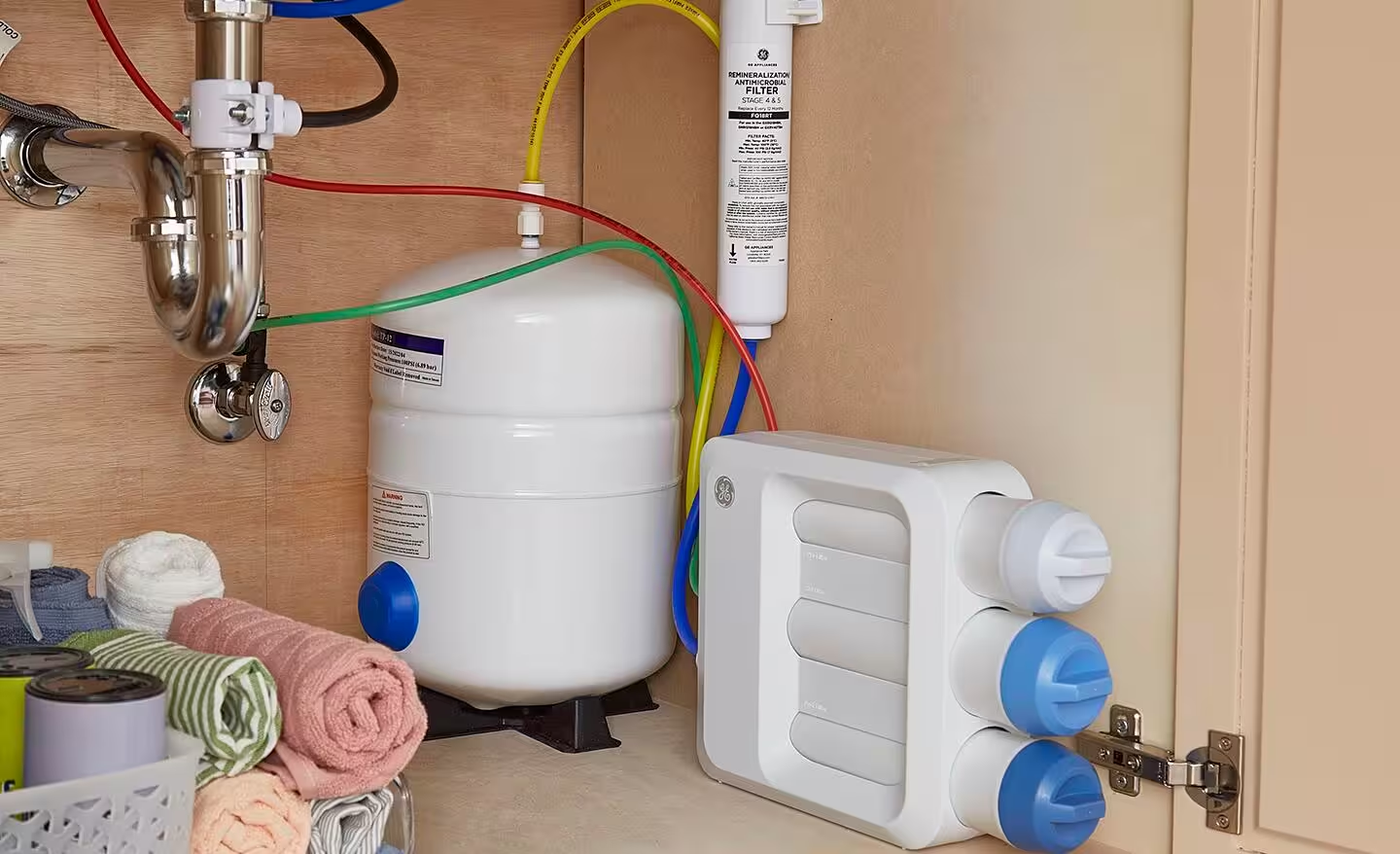
Water is one of those things most people rarely think about until something changes. Hard water can leave mineral deposits on faucets, make soap harder to rinse away, and create that familiar film on shower doors. Over time, it may also affect plumbing fixtures and certain household appliances.
This is where Water Softeners can become worth considering for some homes.
A water softener is designed to reduce certain minerals responsible for hardness, particularly calcium and magnesium. Depending on the water in your area and the needs of your household, treating hard water may improve how water feels, how cleaning products perform, and how quickly mineral deposits build up.
But not every home automatically needs one. The right solution depends on your water quality, household usage, existing plumbing, and budget. Testing the water first is usually a sensible starting point.
Ask Questions Before Saying Yes
A good professional won’t be annoyed by reasonable questions.
Ask what the problem is, what caused it, what options are available, and how long the work should reasonably take. If equipment is being recommended, ask about maintenance and expected lifespan.
You can also ask what happens if the problem returns.
These conversations aren’t about being difficult. They’re about knowing what you’re agreeing to.
And if someone makes you feel uncomfortable simply because you want an explanation, that’s useful information too.
Regular Maintenance Can Prevent Bigger Problems
Home systems rarely fail at a convenient moment. They tend to break when you’re already busy, when guests are coming over, or when you absolutely need them working.
Routine maintenance can help identify small issues before they become expensive repairs. Filters can become clogged, connections can loosen, components can wear down, and mineral buildup can quietly accumulate.
A basic maintenance schedule tailored to your home can make a real difference.
It doesn’t mean every component needs replacing every year. Quite the opposite. Good maintenance is about checking what actually needs attention and avoiding unnecessary work.
Choosing a Company You Can Trust
Ultimately, reliable service is built around trust.
Look for a company that communicates clearly, explains its recommendations, offers transparent pricing, and treats your home with respect. Check customer reviews, ask about guarantees, and don’t hesitate to get a second opinion when a repair or installation is particularly expensive.
You don’t need to become an expert in plumbing, water treatment, or home maintenance. You just need enough information to recognize when someone is treating you fairly.
That’s really what good service comes down to. The job matters, of course, but so does the experience of getting it done. When you find a professional who combines knowledge with honesty and stands behind the work, you’ve found something far more valuable than a quick fix — you’ve found someone you can confidently call the next time your home throws you a curveball.