Cleaner Water Starts With the Right System for Your Home
Water is one of those things most of us barely think about until something seems off. Maybe there’s a strange taste in the glass, a faint odor from the tap, or white scale building up around the faucet. Sometimes the problem is obvious. Other times, the water looks perfectly clear while still containing substances you’d rather not have around.
That’s why choosing a water treatment solution shouldn’t be based simply on what a neighbor installed or what happens to be popular online. Every home has different water conditions, plumbing, usage patterns, and priorities. The better approach is to understand what’s actually in your water first, then choose technology that addresses the specific issue.
Start by Understanding Your Water
Before buying a filtration system, it helps to know what you’re dealing with. Municipal water and private well water can have very different characteristics, and even homes in the same neighborhood may experience noticeable differences.
A water test can reveal information about hardness, pH, chlorine, iron, sediment, dissolved minerals, and other potential contaminants. Testing is particularly useful if your water has recently changed in taste, smell, or appearance.
Many homeowners start with a free water analysis because it provides a practical starting point without making the process feel complicated. Rather than guessing, you can look at actual water-quality information and discuss which treatment options make sense.
It’s worth remembering that “clean-looking” water isn’t necessarily the same as high-quality water. Some contaminants can’t be seen, smelled, or tasted. A proper analysis helps separate everyday nuisance problems from issues that deserve more attention.
Why One Water Filter May Not Be Enough
There’s no universal filter that solves every water problem. A sediment filter, for example, can capture particles but won’t necessarily address dissolved minerals. A softener can reduce hardness but isn’t designed to remove every contaminant.
This is where a layered approach can make sense.
Depending on the water quality, a home might benefit from sediment filtration, activated carbon, water softening, UV treatment, reverse osmosis, or a combination of technologies. The goal isn’t to install the biggest system available. It’s to create a treatment setup that fits the water.
Think of it like buying shoes. The most expensive pair isn’t automatically the best pair. What matters is whether they actually fit.
The Role of Reverse Osmosis in Modern Homes
Reverse osmosis has become increasingly popular because it uses a semi-permeable membrane to reduce a broad range of dissolved substances from water. It’s especially useful when homeowners want highly treated water for drinking and cooking.
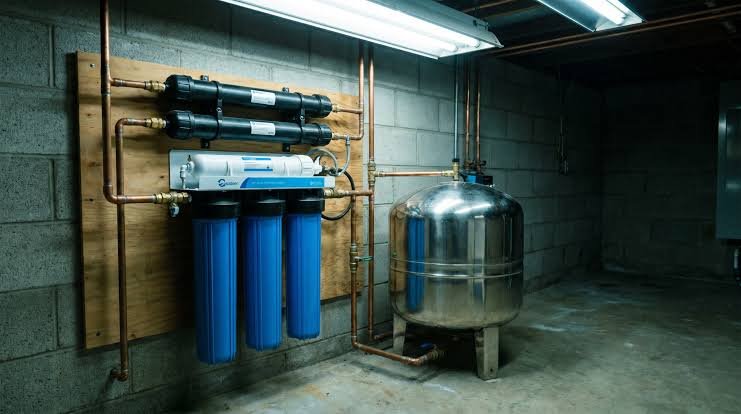
For households that want more extensive coverage, whole home reverse osmosis systems can provide treated water throughout the property rather than limiting purification to a single kitchen faucet.
That said, whole-home reverse osmosis is a significant choice and shouldn’t be treated as a default solution. It can require more equipment, space, maintenance, and careful consideration of water usage and system capacity.
A qualified water-treatment professional can help determine whether whole-home RO is appropriate or whether a point-of-use system would accomplish the goal more efficiently.
Drinking Water Deserves Extra Attention
We use water for much more than drinking. It goes into coffee, tea, soups, cooking, ice, and plenty of other everyday things. So improving the quality of the water used in the kitchen can have a surprisingly noticeable effect on daily life.
Modern drinking water systems can combine different filtration technologies to address specific concerns while providing convenient access to treated water.
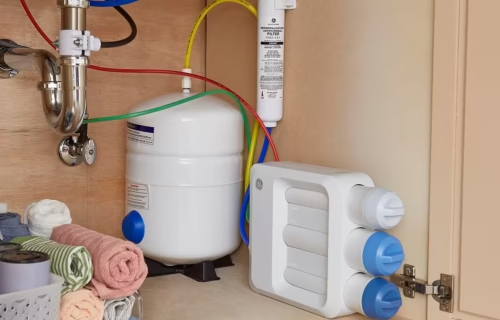
For many households, a point-of-use reverse osmosis system under the kitchen sink is enough. It treats the water people consume most frequently without requiring the entire home’s water supply to pass through an RO membrane.
This can also be a sensible choice for people living in apartments, smaller homes, or properties where a whole-home installation simply isn’t practical.
Don’t Forget About Hard Water
Hard water is another common reason homeowners explore treatment options. It typically contains elevated levels of calcium and magnesium. While hard water isn’t necessarily a health emergency, it can be frustrating.
You may notice chalky deposits around faucets, spots on dishes, reduced soap performance, or scale accumulating inside appliances. Over time, that buildup can affect water heaters, fixtures, showerheads, and other plumbing components.
A water softener works differently from a reverse osmosis system. Instead of primarily targeting dissolved contaminants for drinking-water purification, a softener is designed to address hardness minerals.
In some homes, the best setup is therefore not “RO versus softener.” It’s both, with each system handling a different job.
Maintenance Matters More Than People Think
Even an excellent water-treatment system needs regular care. Filters become saturated, membranes eventually require replacement, and components need occasional inspection.
Skipping maintenance can reduce performance and, in some cases, turn a useful treatment system into an expensive piece of equipment that isn’t doing much.
Homeowners should keep track of filter-change schedules and follow the manufacturer’s maintenance recommendations. If water quality changes suddenly, don’t assume the system is working normally. A professional inspection may identify a clogged filter, worn membrane, pressure issue, or another problem.
Good maintenance isn’t glamorous, admittedly. But it’s one of the easiest ways to protect your investment.
Choosing the Right System for Your Household
When comparing water treatment options, look beyond the equipment itself. Consider the source of your water, household size, daily consumption, available installation space, plumbing setup, and the specific contaminants or minerals that need attention.
It’s also wise to ask practical questions before making a purchase:
- What contaminants does the system actually reduce?
- How often do filters and membranes need replacement?
- What ongoing maintenance is required?
- How much water does the system use during treatment?
- Is professional installation recommended?
- What kind of warranty and service support is available?
These questions can save you from buying technology that sounds impressive but doesn’t solve your particular problem.
Better Water Is About More Than a Filter
Water treatment isn’t really about chasing the latest gadget. It’s about making an informed decision based on the water coming into your home.
Sometimes the answer is a simple carbon filter. Sometimes it’s a softener paired with a reverse osmosis drinking-water system. In other situations, a more comprehensive treatment strategy may be appropriate.
The smartest first step is usually the least complicated one: understand your water, identify what needs improvement, and then choose the technology that fits.
After all, clean, pleasant-tasting water shouldn’t feel like a luxury or a guessing game. With the right information and a properly selected system, it can simply become one less thing you have to worry about.